


What to Eat in Phuket Old Town: Local Dishes and Food Culture
If you are deciding what to eat in Phuket Old Town, start with the idea that this is not a single cuisine. The neighbourhood’s food reflects generations of trade, migration and family cooking. Thai, Chinese, Malay and sea-faring communities all left their mark, creating a local table with its own flavours, names and rhythms.
A bowl of noodles can be a quick lunch, but it also carries a story of adaptation. A curry with rice noodles may be a morning ritual. A braised pork dish points back to Chinese-Peranakan home cooking. You do not need to chase a long checklist. Try a few things well, ask questions, and notice what local diners are ordering.
Phuket’s food culture grew alongside the island’s maritime connections and tin-mining era. TAT describes Phuket cuisine as a meeting point of Thai, Chinese, Malay and sea-folk cooking. The architecture of the old town carries related Chinese, Malay and European influences, and food is one of the clearest everyday expressions of that layered history.
Chinese influence is especially visible in noodle dishes, dim sum breakfasts, braises and snacks. Peranakan traditions, shaped by Chinese communities in the Malay Peninsula, are another useful lens for understanding the local palate. They help explain why some Phuket dishes combine Chinese-style technique with southern Thai heat, coconut-based sauces or local seafood.
In 2015, UNESCO named Phuket a Creative City of Gastronomy. The designation is for Phuket as a city, not a badge of approval for individual stalls or restaurants. UNESCO notes that recipes and culinary knowledge are passed through families and communities, and that gastronomy can support intercultural and intergenerational exchange. Approach Old Town food as living culture rather than a tourist challenge to complete.
Recipes and spellings vary between cooks, so treat these as starting points, not a ranking. Ask a vendor how they make their version, particularly if you have dietary needs.
Mee Hokkien, often called Hokkien noodles, is one of Phuket’s signature dishes. It usually centres on yellow wheat noodles cooked in a savoury sauce and may include seafood, pork, egg or vegetables, depending on the kitchen. The flavour is hearty and robust.
It is an easy first order if you want a dish with clear Chinese influence and local adaptations. If you do not eat seafood or pork, ask before ordering rather than assuming a vegetable version is available. Broth, toppings and wok oil can all differ.
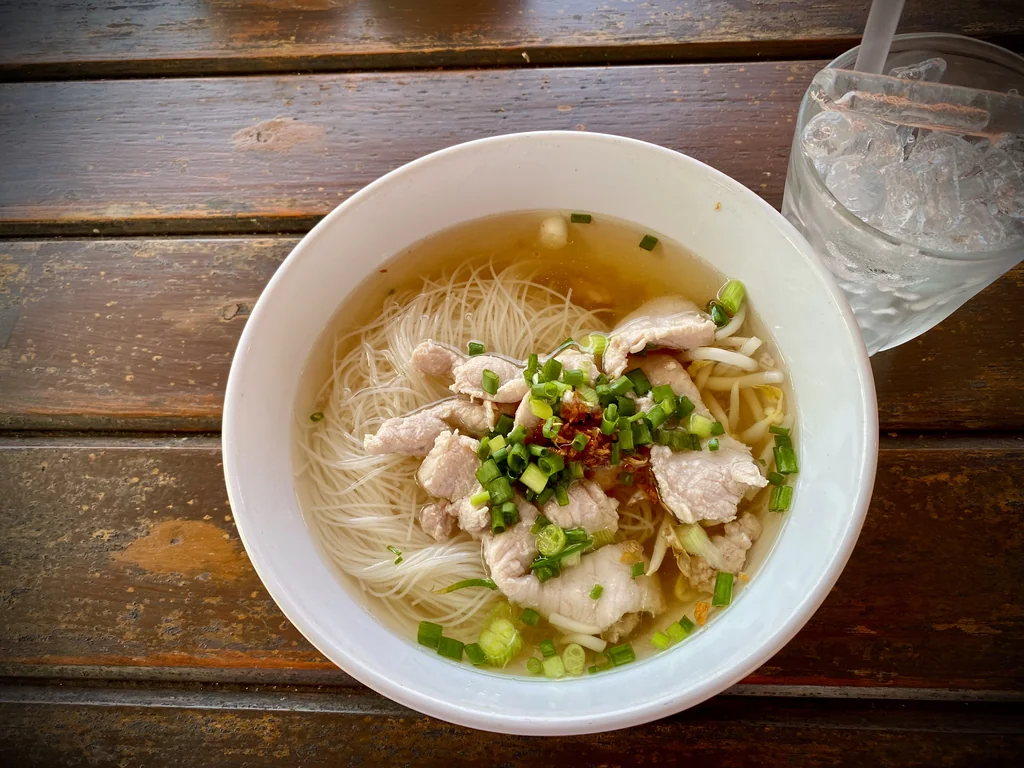
Kanom jeen consists of thin fermented rice noodles served with a curry or sauce and fresh accompaniments. In Phuket, it is strongly associated with breakfast and often works as a choose-your-own plate: noodles first, then sauce, herbs, pickles or vegetables.
It is a good way to taste the southern side of Phuket’s food culture. Sauces may contain fish, shrimp paste, coconut milk or meat, so the display of vegetables does not necessarily make the whole dish vegetarian. Choose a small portion if you hope to sample more than one sauce.
Moo hong is a slow-braised pork dish with deep, savoury-sweet character, commonly linked with Phuket’s Chinese-Peranakan food heritage. It is usually eaten with rice and feels closer to home cooking than to a quick snack.
For travellers who eat pork, it shows how Chinese-derived braising traditions became part of Phuket’s local food identity. For anyone avoiding pork, recognise the name and choose another dish rather than trying to modify it.
Oh tao is a Phuket snack that brings together taro and oysters on a hot griddle, often with egg. Its appeal is textural: crisp at the edges, soft in the middle, and rich from the oyster and egg. It is a reminder that island food culture is tied to the sea as well as to Old Town’s trading communities.
Shellfish is central to the dish, so it is unsuitable for those with a shellfish allergy. A shared griddle can also be a concern for severe allergies.
A-pong is a thin, lightly sweet coconut-based snack, cooked in a small pan and rolled or folded. It suits a short pause while walking rather than a full dessert course. Look too for Chinese-influenced cakes and small treats alongside savoury stalls.
Earlier in the day, the Chinese side of Phuket’s food culture is especially visible in dim sum, steamed buns and small savoury plates. Pickled vegetables, chilli, fresh herbs and dipping sauces can change the balance of a dish. Add condiments gradually, especially with southern Thai food.
Begin with a substantial local dish, such as mee Hokkien or kanom jeen, then leave room for a griddled snack and something sweet. A market is a good place to browse, but not a reason to over-order.
Go at the time that fits the food. Breakfast dishes are worth seeking earlier, while markets and snack stalls may make more sense later in the day. Individual vendors set their own hours and can sell out, so do not build a day around one stall unless you have checked directly.
At a busy counter, observe the queue before stepping in. Ask before photographing people, food being prepared or a display. Eat seated when seating is offered, return bowls or trays as requested, and use the bins provided. Carrying small notes and coins can be helpful for quick purchases, though payment options vary. Confirm the price before adding extras and keep your order simple when the vendor is busy.
Phuket Old Town can work well for many diets, but the details matter. Seafood, pork, egg, fish sauce, shrimp paste and meat stock are common across local dishes. A vegetarian-looking noodle bowl or vegetable side may still use fish sauce or stock, and a seafood-free dish may share a wok, oil or utensils with seafood.
For an allergy, prepare a short written or translated note naming the ingredient you must avoid and explaining that it is an allergy. Ask whether the dish contains it and whether it can touch the same wok, griddle, oil or serving tools. If the answer is unclear, choose another dish. Removing a visible topping does not make a sauce or stock safe.
Vegetarians and vegans should ask specifically about fish sauce, shrimp paste, egg and stock. People avoiding pork should ask about pork, lard and broth. Halal travellers should look for clear certification or signage where available and ask directly about ingredients and preparation. A translation app or dietary card is more reliable than trying to memorise a long request at a busy counter.
Spice deserves similar planning. You can request less chilli, but a base sauce may already be hot. Start with a small serving and sample condiments in small amounts.
Old Town is more rewarding when you leave time to eat with attention. Plan a route that allows for a proper breakfast or lunch, a snack, and a return to rest before the next outing. If you are shaping a city-focused stay, see how a stay at Bhukitta Boutique Hotel Phuket can fit into your Phuket plans, then review the hotel’s facilities before you go.
The memorable part is rarely finding a single “best” dish. It is recognising the connections on the plate: Hokkien-style noodles beside southern curry traditions, Chinese-Peranakan braises, coconut sweets and seafood snacks. Eat slowly, ask respectfully and let the old town’s food culture set the pace.
Mee Hokkien, Phuket-style kanom jeen, moo hong, oh tao and a-pong are useful starting points. They represent noodles, curries, braises, seafood snacks and coconut sweets. Choose according to your diet rather than trying to eat them all in one meal.
Some local dishes, especially southern Thai curries and chilli condiments, can be spicy, but not every dish is hot. Ask about the spice level, start with a small serving and add condiments gradually.
Yes, with careful questions. Fish sauce, shrimp paste, egg and meat stock are common, even in dishes that look vegetable-based. Ask about the sauce, stock and shared cooking equipment before ordering.
Both can be worthwhile. Markets are good for browsing snacks and seeing several dishes, while a sit-down meal can suit a fuller local dish and a slower conversation about ingredients. Let the meal you want guide the choice, not a restaurant ranking.
Build your Phuket Old Town food walk around a few local dishes rather than a packed list. Read more about staying at Bhukitta Boutique Hotel Phuket and view the available hotel facilities.
รับส่วนลดห้องพักเพิ่มสูงสุด 5% สำหรับสมาชิก
แจ้งล่วงหน้าอย่างน้อย 3 วัน ก่อนวันเข้าพัก ในช่วงวันที่ 1 พฤษภาคม – 31 ตุลาคม เท่านั้น
รับส่วนลด 10% สำหรับค่าอาหารและเครื่องดื่มภายในโรงแรม
รับส่วนลด 10% สำหรับสินค้าของที่ระลึกภายในโรงแรม