


Phuket Old Town Travel Guide: Culture, Food and Walking Routes
Phuket Old Town is not a recreated heritage zone or a single pedestrian street. It is a working part of Phuket Town where old shophouses sit beside temples, cafés, family-run food businesses, schools and everyday shops. The best way to see it is on foot, with enough time to look up from the pavement and enough flexibility to follow a side street when something catches your eye.
This is where the island’s tin-mining history, Chinese migration, Peranakan culture and southern Thai cooking meet. A good visit can be as simple as a morning walk and a noodle lunch, or it can fill most of a day if you add museums, markets and a slower food stop. Use this Phuket Old Town travel guide to build a route around your interests rather than trying to collect every photo spot.
The historic town grew in the late nineteenth and early twentieth centuries, when Phuket’s tin economy drew merchants, labourers and investors from across the region. Chinese communities were central to that development, while trade connected the island with the Malay Peninsula, Europe and beyond. The resulting townscape does not belong to one culture alone.
That mix is visible in the food, festivals, religious sites and architecture. You may hear the word Baba-Nyonya or Peranakan, which broadly refers to the local Straits Chinese culture shaped through generations of exchange in this part of Southeast Asia. These terms describe living communities and traditions, not simply a decorative style for visitors.
Phuket also belongs to UNESCO’s Creative Cities Network as a Creative City of Gastronomy. That recognition reflects the role food plays in passing recipes, skills and local knowledge between generations. It is a useful lens for Old Town: eat with curiosity, but remember that the area’s restaurants and stalls are workplaces as well as attractions.
The most recognisable buildings in Phuket Old Town are the narrow, attached shophouses often described as Sino-Portuguese. The label is convenient, but the streetscape is more layered than it suggests. Chinese, European and local building traditions all influenced façades, plans and ornament.
Look for the covered passages in front of shophouses, often called five-foot ways, which give pedestrians shade and shelter from rain. Many buildings extend far back from a slim frontage, historically combining commerce with family life. Internal courtyards, shutters and high openings manage light and air in the tropical climate. On the façades, stucco flowers, tiled panels, arches and Chinese motifs may appear on the same block.
The streets are most comfortable early or late in the day. Around midday, the light is hard and the heat can make an ambitious route feel longer than it is. Slow down under the covered walkways, carry water and step into a museum or café rather than forcing the next stop.
Thalang Road is the natural starting point. It has many of the colourful shophouse fronts people associate with Old Town, plus shops, cafés and the pedestrian market atmosphere that builds on Sunday afternoons. Come early if you want clearer views of the architecture, or come later for more energy and food stalls.
From Thalang, turn toward Soi Romanee. It is a short lane with restored façades, small businesses and a more intimate scale. Keep doorways clear, avoid treating occupied homes or businesses as a backdrop, and ask before photographing people.
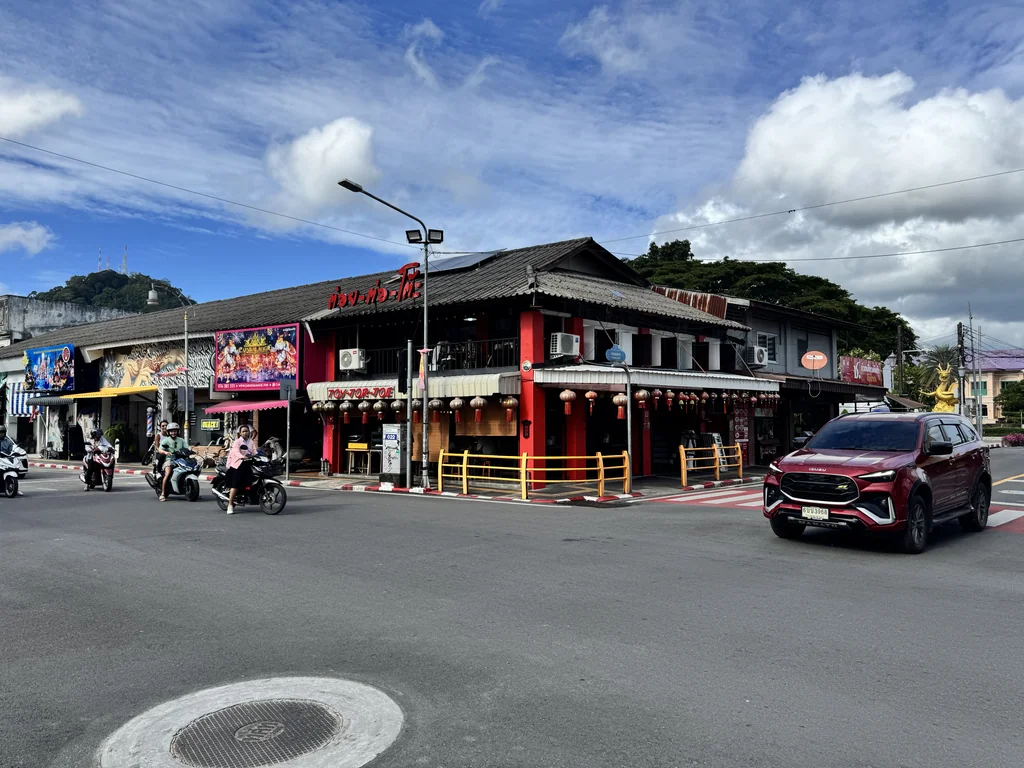
Dibuk Road rewards a slower walk and connects the most visited lanes with quieter corners of the district. Krabi Road is another key heritage street, especially if you plan to visit a historic house museum. Phang Nga Road and Yaowarat Road broaden the picture further, with commercial buildings, shrines, food stops and less polished sections that remind you this is a living town.
Do not worry if your walk is not perfectly linear. The pleasure of Old Town is in the changes between streets: a shaded arcade, a tiled façade, the smell of breakfast, a shrine, a family shop and then a mural or a busy intersection.
The route below is designed for walking, with optional museum stops. Exact opening hours, admission rules and market schedules can change, so confirm them directly with each venue or organiser before you set out.
| Time of day | Route and focus | Allow |
| — | — | — |
| Morning | Begin on Thalang Road, then walk through Soi Romanee. Look at façades and covered walkways while the streets are relatively calm. | 60 to 90 minutes |
| Late morning | Continue along Dibuk Road and Krabi Road. Choose one museum or historic house if it is open. | 60 to 90 minutes |
| Lunch | Stop for a local Phuket-style meal, then take a proper break from the heat. | 45 to 75 minutes |
| Afternoon | Explore Phang Nga Road or Yaowarat Road, browse independent shops and visit another cultural stop if it genuinely interests you. | 60 to 90 minutes |
| Evening | Return to the streets for dinner. On a Sunday, consider the walking street market after checking the current schedule. | Flexible |
If you have only two hours, make it a short loop: Thalang Road, Soi Romanee, Dibuk Road, then back toward your starting point. This smaller route is more satisfying than racing across the whole district in the hottest part of the day.
A museum is not compulsory, but it can turn a pretty walk into a more informed visit. Choose one or two rather than trying to fit in everything.
Chinpracha House on Krabi Road is a historic residence associated with the island’s Sino-Portuguese heritage. It offers a useful contrast to the rows of shophouses. Check its opening arrangements and house rules about photography and access before going.
Thai Hua Museum can add context about Chinese communities in Phuket. Smaller cultural venues may change exhibitions or opening patterns, so regard them as optional anchors rather than fixed appointments. If one is closed, keep the route and spend the time looking more closely at the streets around it.
Shrines and temples are also part of Old Town’s cultural map. They are places of worship, not stops to rush through. Dress respectfully, lower your voice and observe signs about shoes, photographs and areas that are not open to visitors.
The larger Thalang National Museum is outside the Old Town walking core. It works better as a separate excursion than a casual addition to this route, as it will change the pace and transport needs of your day.
Old Town is an excellent place to try Phuket’s food traditions, but the aim is not to chase a viral list. Pick a place that looks busy with regular customers, read the menu carefully and order what you are comfortable eating. At small venues, a little patience goes a long way.
Hokkien-style noodles are a classic starting point. The dish varies by kitchen, but it commonly centres on thick yellow noodles and a rich, savoury sauce. Ask about seafood, pork or other ingredients if you have dietary requirements. Another familiar breakfast or snack culture includes dim sum, where the pleasure lies in trying a few small items rather than ordering too much at once.
You may also see Phuket-style curries, braised dishes, roti, sweets and drinks that reflect the island’s Chinese, Malay and Thai connections. Food names can be transliterated differently from one sign or menu to another. If you do not recognise something, ask politely.
For a responsible food stop:
UNESCO’s gastronomy profile for Phuket highlights the value of safeguarding recipes and local food resources. The most direct way for a visitor to support that culture is simple: pay fairly, eat thoughtfully and leave room for the people who live and work here.
The best-known regular event is the Sunday walking street on Thalang Road, often called Lard Yai. It brings food, crafts, performances and a much busier atmosphere than a weekday walk. It is a fun way to spend an evening, but it is not the ideal time for uninterrupted architecture photography or a quiet museum visit.
Treat market timing as a planning prompt, not a guarantee. Weather, municipal arrangements, public holidays and special events can affect hours or road closures. Check a current official tourism or municipal notice on the day, particularly if the market is central to your itinerary.
Old Town also hosts cultural festivals and community events at different times of year. These can be rewarding, though they bring crowds, traffic changes and limited parking. Arrive early, travel light and expect to adjust your route.
Wear comfortable shoes and bring sun protection. Phuket’s rain can arrive quickly, so a compact rain layer is practical. The covered shophouse walkways offer some shelter, but they are not continuous and should never be treated as private seating or storage space.
Avoid trying to drive every block. Roads can be busy and parking is limited around the popular streets, especially on Sunday. A drop-off near the edge of the historic area and a walk from there is usually less stressful. If you use a ride service or taxi, agree on a safe, legal meeting point rather than stopping in a narrow lane.
Keep an eye on opening times, footwear rules and cash needs. Some small places may prefer cash, but do not assume this is universal. A small amount of Thai baht is useful for minor purchases.
If you are staying nearby, there is no need to compress the experience into one long march. Bhukitta Boutique Hotel’s homepage notes a walk of about 10 to 15 minutes to Thalang Road, making it practical to explore in the morning, rest, then return for dinner or a Sunday market. Browse the hotel’s rooms before booking, and use the Bhukitta blog for local stay inspiration. For a closer introduction to the hotel itself, read Stay in Style: Bhukitta Boutique Hotel Phuket.
Old Town stays interesting because it is not frozen in time. The same streets support families, worship, work, deliveries and daily errands. Visitors help protect that character when they make small, practical choices.
Stay on the public path and do not lean into shopfronts for photographs. Keep noise down in the early morning and evening. Ask before photographing vendors or anyone in ceremonial dress. Buy from independent businesses when it suits you, but do not bargain aggressively over low-cost food or handmade goods. If a café, house or shrine sets a rule, follow it.
Architecture also deserves more than a quick image. Look for the repair work, uneven surfaces and ordinary details that show how old buildings are being adapted for present-day use. Conservation is not only about paint colour. It is about keeping a district usable for the people whose lives give it meaning.
Allow at least two to three hours for the core streets. A half day is better if you want a museum, a sit-down meal and time to browse. Add an evening if you plan to visit the Sunday walking street.
Yes, the central heritage streets are best explored on foot. The pavement, heat and rain can slow you down, so plan a compact route, wear comfortable shoes and take breaks.
Early morning is best for a calmer walk and softer light. Late afternoon and evening are better for food and a livelier atmosphere. Sunday is popular for the walking street market, but confirm its current schedule before travelling.
Hokkien-style noodles and dim sum are good places to begin. Look for a busy local venue, ask about ingredients and try only what fits your dietary needs.
The hotel’s official website says Thalang Road and the colourful historic buildings are about a 10 to 15 minute walk away. Allow extra time for heat, rain, traffic crossings and any stops along the way.
Start with one street, one food stop and one reason to pause. That might be a façade on Dibuk Road, a bowl of noodles, a museum display or the evening market. Phuket Old Town is more rewarding when you leave space for its everyday rhythm.
For a stay within easy reach of the historic quarter, explore Bhukitta Boutique Hotel and its Phuket Town accommodation. Plan a morning route, take a break when the day gets warm, then head back out when the streets come alive again.
รับส่วนลดห้องพักเพิ่มสูงสุด 5% สำหรับสมาชิก
แจ้งล่วงหน้าอย่างน้อย 3 วัน ก่อนวันเข้าพัก ในช่วงวันที่ 1 พฤษภาคม – 31 ตุลาคม เท่านั้น
รับส่วนลด 10% สำหรับค่าอาหารและเครื่องดื่มภายในโรงแรม
รับส่วนลด 10% สำหรับสินค้าของที่ระลึกภายในโรงแรม